
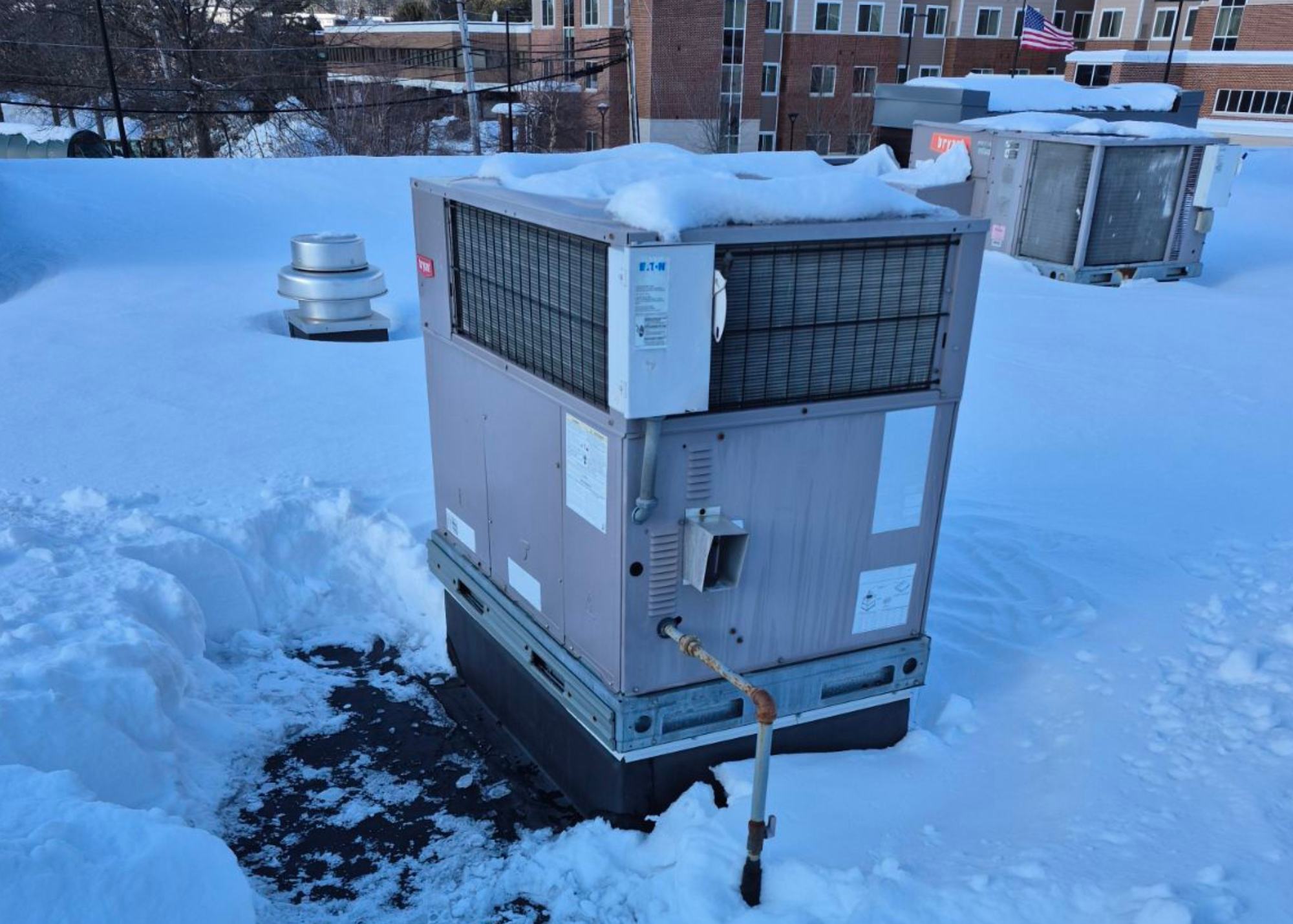
Winter in New England is tough on commercial systems — and not all damage is obvious. Even if your equipment ran reliably through the colder months, snow accumulation, ice formation, wind-driven moisture, and road salt exposure may have quietly impacted performance and longevity.
Where Winter Causes Hidden Damage
- Rooftop Units (RTUs)
Heavy snow loads can strain housings and curb connections, while freeze-thaw cycles may loosen seals and fasteners. When snow melts and refreezes, water can infiltrate cabinet seams and electrical compartments. - Corrosion from Salt Exposure
For facilities near roadways or coastal areas, salt spray accelerates corrosion on condenser coils, base pans, fasteners, and exposed metal components. Over time, this reduces efficiency and shortens equipment life. - Damaged Coils & Fins
Ice buildup can bend fins or restrict airflow, forcing systems to work harder as cooling season approaches. - Electrical & Control Issues
Moisture intrusion can compromise wiring, sensors, and connections — issues that often surface later when cooling demand increases.
Why Spring Is the Right Time to Act Before Summer Hits
Early spring inspections allow you to:
- Identify corrosion before it spreads
- Reseal vulnerable cabinet areas
- Clean coils to restore efficiency
- Catch small electrical issues before summer strain exposes them
Addressing winter wear now helps prevent unexpected downtime when your building needs cooling most. For commercial facilities that rely on consistent environmental control — from restaurants to healthcare environments — a proactive inspection protects both equipment and business continuity.
To stay ahead of seasonal wear and unexpected breakdowns, many facility managers rely on structured preventative maintenance programs. Medford Wellington offers comprehensive preventative maintenance services designed to keep HVAC, refrigeration, electrical, and plumbing systems operating at peak performance year-round.
Through scheduled inspections, system cleaning, performance testing, and early issue detection, our technicians help identify small concerns before they turn into costly disruptions. With a preventative maintenance plan in place, businesses gain better system reliability, improved energy efficiency, and greater confidence that their critical infrastructure is prepared for the demands of the seasons ahead.